Table of contents
Self-care has shifted from a luxury to a daily habit, and the body is no longer the “forgotten” step behind skincare. In 2024 and 2025, search trends, retail data, and dermatologists’ advice converge on the same point: people want routines that feel sensorial, but also credible, traceable, and effective. The result is a new generation of body rituals that borrow from traditional practices, then translate them into modern textures, safer formulas, and time-efficient steps that actually fit real mornings and late nights.
Body care is having its skincare moment
Body care is no longer just soap and lotion, and the numbers make that hard to ignore. The global bath and shower market was valued at about USD 56.9 billion in 2023 and is projected to reach roughly USD 80.5 billion by 2030, according to Grand View Research, and body moisturizers and body treatments are following the same upward curve as consumers treat the torso, legs, and hands with the same intention they once reserved for the face. In the prestige segment, brands have pushed beyond basic hydration into exfoliating acids, barrier-support lipids, and fragrance profiles that mimic fine perfumery rather than “clean laundry,” and shoppers are responding because the promise is simple: visible results, plus a ritual that feels like a reset.
Part of this acceleration is cultural, and part of it is practical. The pandemic years normalized home rituals, and even as travel and nightlife returned, the habit remained, especially when routines can be done in minutes. Dermatologists have also kept body care in the spotlight because the body shows stress in obvious ways: itch from barrier disruption, keratosis pilaris on arms, “strawberry legs” after shaving, and dryness that worsens with long hot showers and cold seasons. The American Academy of Dermatology has long advised daily moisturizing, especially after bathing, and that guidance now travels fast on social platforms, where “body slugging,” exfoliating gloves, and dry brushing tutorials rack up millions of views. Consumers may arrive for the trend, but they stay for the payoff: smoother skin, fewer ingrowns, and less tightness at the end of the day.
The old gestures still work, when updated
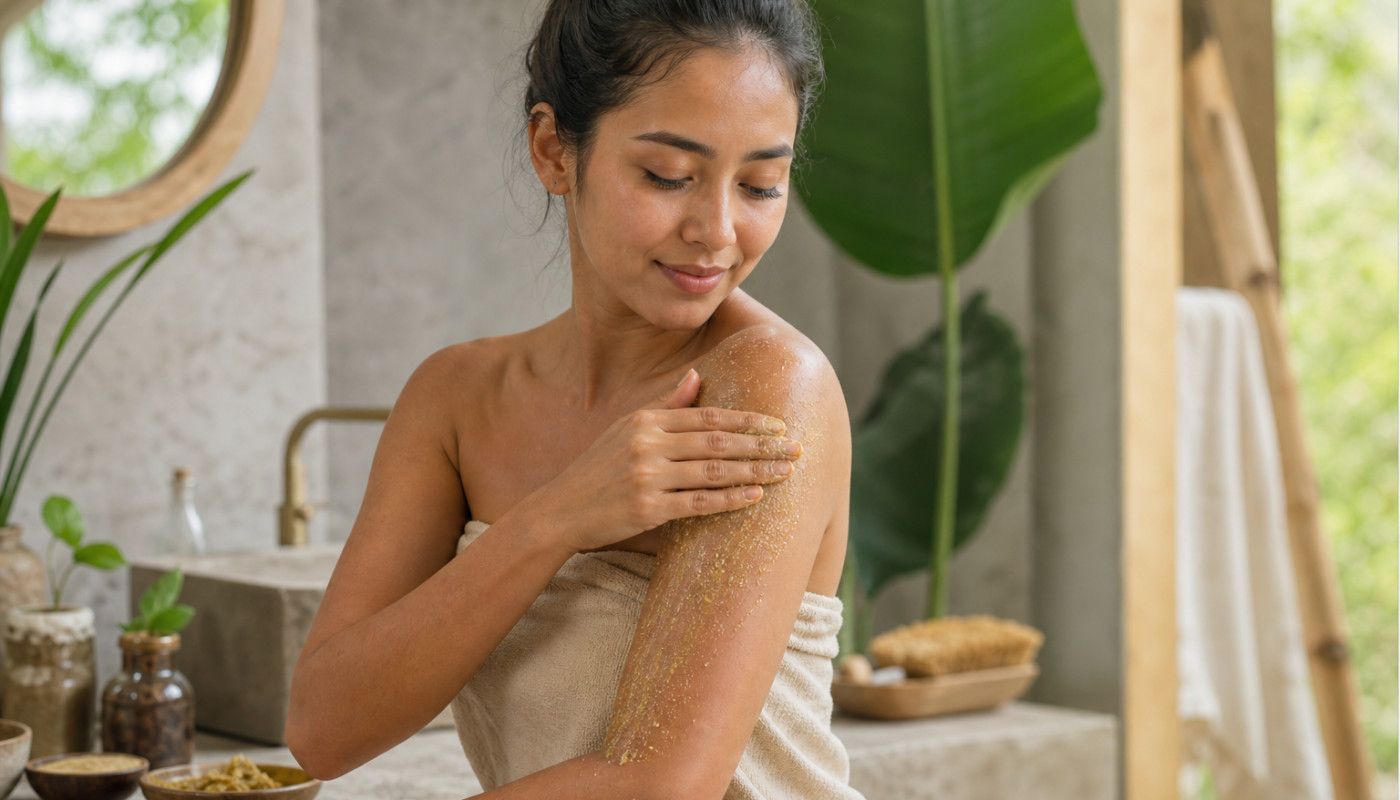
Some of the most effective body rituals are centuries old, and the modern twist is less about reinventing them than refining them. Hammam-style cleansing, for instance, relies on warmth, soaking, and mechanical exfoliation, and today you can recreate the logic without an hours-long spa visit. A warm shower softens the stratum corneum, a gentle scrub lifts dead cells, and a rich emollient seals in water before it evaporates; the science aligns with what tradition learned by observation. The same is true of oiling practices seen across the Mediterranean, South Asia, and parts of Africa, where plant oils were used for massage, protection from dryness, and scent, and where modern cosmetic chemistry now helps stabilise those oils, improve sensorial finish, and reduce irritation through better refinement and allergen disclosure.
But “traditional” does not automatically mean “safe,” and this is where contemporary beauty earns its place. Essential oils, for example, can be potent sensitisers, and even botanical extracts can trigger reactions when they are overused or poorly formulated. The update is in dosage, testing, and transparency: patch testing, IFRA-aligned fragrance practices, and clearer INCI lists allow consumers to keep the ritual, while reducing risk. Exfoliation offers another good example. Traditional scrubs can be very abrasive, especially with sharp particles, and modern body care increasingly swaps harsh physical exfoliants for controlled chemical options like lactic acid or urea, which are well documented for smoothing roughness and supporting hydration. In other words, the old gestures still work, and they often work better when the formula respects modern skin science and modern skin sensitivity.
Ingredients tell the story, not the marketing
It is easy to get swept up by packaging and claims, yet the most meaningful bridge between heritage and innovation is written on the ingredient list. If the goal is comfort and barrier support, look for glycerin, urea, ceramides, cholesterol, fatty acids, and squalane, because these align with the skin’s natural moisturising factors and lipid structure. If the goal is smoother texture, keratosis pilaris control, or fewer ingrowns, then alpha-hydroxy acids like lactic or glycolic acid, beta-hydroxy acids like salicylic acid, and urea at higher concentrations are commonly used in dermatology and in cosmetic formulations, and they have data behind them. The key is not to stack everything at once, because more actives do not guarantee more results, and over-exfoliation on the body can lead to dryness, stinging, and post-inflammatory marks, especially on darker skin tones.
Data can also be consumer-facing, not just clinical. Google Trends has repeatedly shown seasonal spikes for queries such as “body lotion for dry skin” and “keratosis pilaris,” typically rising in colder months when transepidermal water loss is higher, and retailers mirror that pattern with winter promotions on moisturisers and occlusive balms. Meanwhile, fragrance has become an entry point to ritual, with the global fragrance market estimated around USD 57–58 billion in 2023 and forecast to expand through the decade, depending on the source and methodology, which helps explain why body products increasingly smell like fine fragrance launches. Yet the best routines still follow a simple hierarchy: cleanse without stripping, exfoliate with intention, moisturise on damp skin, and protect areas prone to friction. If you want a practical way to deepen that approach, without turning your bathroom into a lab, you can find more hints that focus on building a coherent ritual rather than chasing one-off “miracle” steps.
How to build a ritual you will keep
Consistency beats complexity, and the most sustainable routines are designed around real constraints: time, budget, and skin tolerance. Start by choosing one “anchor” moment in the day, usually the shower, then attach two steps that feel non-negotiable. For many people, that means a mild cleanser and a moisturiser applied within minutes of towel-drying, because skin still holds water and the product spreads faster. Exfoliation can sit on a schedule, not a daily impulse: once or twice a week for a scrub or exfoliating glove, or every other day for a gentle acid lotion, depending on sensitivity and the rest of your routine. If shaving or hair removal is part of your life, the order matters, and so does patience, because exfoliating immediately before or after can irritate the follicle; spacing those steps often reduces bumps more effectively than adding another active.
Traditional tools can still play a role, as long as you treat them like skincare devices rather than folklore objects. Dry brushing can feel invigorating and may help with product penetration by removing surface flakes, but aggressive pressure can inflame skin, so the modern rule is light strokes and clean brushes. Massage, whether with oil or balm, has a clear benefit for body awareness and relaxation, and while it is not a medical cure for cellulite, it can temporarily improve the look of skin texture by boosting circulation and reducing fluid retention. The contemporary add-on is hygiene and formulation: use non-comedogenic oils if you break out on the back, wash tools regularly, and avoid fragranced products on freshly shaved or compromised skin. A ritual you keep is the one that respects your barrier, your schedule, and your senses, and that is the point where traditional wisdom stops being nostalgic and becomes genuinely useful.
Booking the right body care, without overspending
To get started, plan around your calendar and your wallet: buy one cleanser and one moisturiser first, then add an exfoliant after two weeks if your skin feels stable. If you prefer professional help, book a body scrub or hammam-style treatment monthly, and budget for seasonal switches to richer textures in winter. Check local pharmacy loyalty programs, spa packages, and any employer wellbeing benefits that can offset costs.
Similar

Unmasking the Hidden Health Benefits of Spicy Foods
